

In recent discussions with customers reviewing their warehouse operations, one thing is becoming clear. The traditional approach to warehouse upgrades is no longer fit for purpose.
Too often, decisions are made in isolation—focused on immediate cost or individual pieces of equipment—rather than considering how the entire environment works together over time.
A modern warehouse fit-out should be viewed as an integrated system.
• Racking and shelving are not just storage solutions; they directly impact space utilisation, picking efficiency, and safety outcomes.
• Materials handling equipment should be selected based on workflow design and throughput requirements, not simply upfront price.
• Safety is not a compliance checkbox—it is a design principle that should be embedded from day one.
• Energy usage is becoming a strategic consideration, with solar increasingly part of the conversation for high-demand sites.
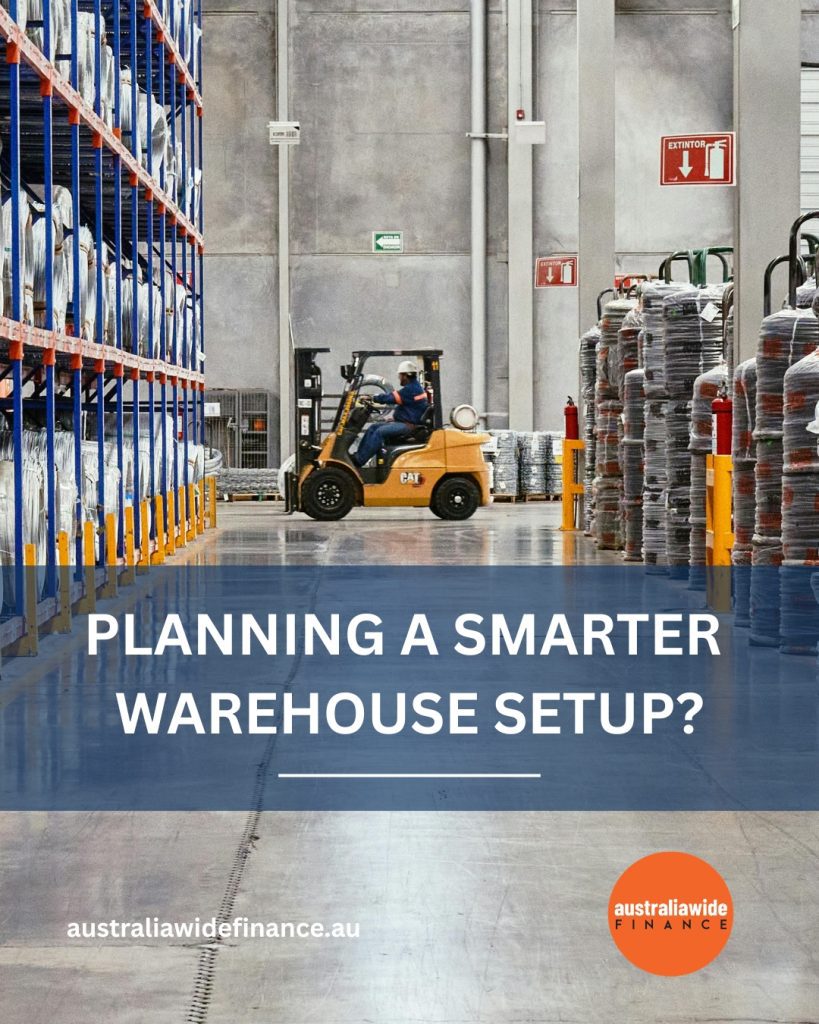
The shift we are seeing is from reactive upgrades to deliberate, long-term planning.
The challenge, of course, is balancing this with cash flow. This is where structured finance is often misunderstood. When used strategically, it allows businesses to implement the right solution upfront—rather than a compromised version—while aligning repayments with the value those assets generate over time. In other words, finance should enable better decisions, not limit them.
If you are rethinking your warehouse setup, it may be worth stepping back and considering not just what you need today, but what will support your operations in the years ahead. Australiawide Finance works with businesses to structure funding that supports that longer-term view.